Sunday, 9 August 2015

Retro Arcade Game Maker
Playing published game. If you are blocking pop-ups, click play game now.


Make your own 8-bit retro arcade game with this game maker. Build fun platformers, RPG stories, boss-battles, and unique games with this game maker.
The Flash Arcade Game Maker requires the Adobe Flash 10 plugin. Click here to get the latest version of the Flash Player.

Tuesday, 14 April 2015
Want a free blog???? monetize it here ...
Hey Wanna a Free blog …..here u get it
First know some basic things about a blogging :
A blog (a truncation of the expression weblog) is a discussion or informational site
published on the World Wide Web and consisting of discrete entries
("posts") typically displayed in reverse chronological order (the
most recent post appears first). Until 2009 blogs were usually the work of a
single individual occasionally
of a small group, and often covered a single subject. More recently
"multi-author blogs" (MABs) have developed, with posts written by
large numbers of authors and professionally edited. MABs from newspapers, other media outlets, universities, think tanks,advocacy groups and similar institutions account for
an increasing quantity of blog traffic. The rise of Twitter and other "microblogging"
systems helps integrate MABs and single-author blogs into societal newstreams. Blog can also be used as a verb, meaning to maintain or add content to a
blog.
The emergence and growth of blogs in the late 1990s coincided
with the advent of web publishing
tools that facilitated the
posting of content by non-technical users.
(source : narayanaa’s forum)
give these info through our contact form :::::::::
Now I Guess U’ve got some stuff :::
Step 1 : Just give me your Bio:::::
Step 2 : Type of blog that you are need off.
Step 3 : Time period
(within how many days you
want )
Step 4 : Title for your blog ::::
(Note : Blog’s feed link will be created by our
team as it is not adoptable by you ….coz it is based on the availability
,,,,,,,, )
That’s it …..
You can stay in touch with our team :
@techcarls (twitter)
Monday, 13 April 2015
Tuesday, 7 April 2015
Facts that are shocking about facebook ::::::::::::
Information on Facebook is becoming a major factor in marriage conflicts and is increasingly being used as a source of evidence in divorce cases. In 2011, Facebook was cited as a reason for a third of divorces (Divorce-Online).
The most common reasons Divorce-Online found cited as evidence were; inappropriate messages to members of the opposite sex, separated spouses posting nasty comments about each other, and facebook friends reporting spouse’s behavior.
The greater availability of information online through social media has created a variety of problems for relationships at every level. Conflict caused by embarrassment, jealousy, false assumptions, and stalker-like behavior, are some of the social disasters that can result from the misuse of social media. Check out this article for more information and how to avoid the major issues social media causes relationships.
 In 2011, Iceland finally took on the task of rewriting its constitution as it had been hoping to do for many years, but had never got around to doing. When Iceland broke from Denmark in 1944, it merely took the Danish constitution and made minor changes. For example, the title of king was changed to president.
The Icelandic people were driven to change their constitution after their financial troubles in 2008. Their currency, the krona, last values and banks failed. The hope was that with some reformation and checks and balances another financial breakdown could be prevented.
The actual draft of the new constitution was being written by 25 people as part of a council. The council put their draft on Facebook for users to make suggestions about amendments and to have debates with one another about the constitution. They also streamed the proceedings of the council not only on their website, but also on Facebook.
The writing of the constitution took influence from all those on social media. The finished result came from the combined efforts of those 25 council member, Facebook, Twitter, and other social media. Do you think politics will flow more onto social media than it already has?
 Adding the number 4 to the end of Facebook’s URL will automatically direct you to Mark Zuckerberg’s wall.
 Just in case you’re not familiar with the term “URL” - type in this web address: www.facebook.com/4. We’re not sure why Zuckerberg chose the fourth ID number instead of number 1, but this is a quick and easy way to get to the original Facebook wall that is owned by its creator. Adding the numbers 5 or 6 to the end of the URL will take you to the respective profiles of Chris Hughes and Dustin Moskovitz, Facebook co-founders and Mark’s former college roommates. Tacking a 7 onto the web address leads to the profile of Arie Hasit, another good friend of Zuckerberg from his days at Harvard. To see the first few registered profiles of other Facebook employees, check out this website.

Basically, if you find an original bug within the Facebook software and system, they’ll reward you with up to $500. There are stipulations to the rules, though. They allow this as showing appreciation for their security researchers. One cannot disclose personal information about others and must give Facebook 24 hours in good faith to fix the issue before going public with the bug. Only one bounty per security bug is given.
How to whistle with your fingers ??????
- Follow these steps ::::::::Then you will be able to whistle ::::
- Step 1: Lips. The actual whistling sound isn't made with the lips. ...
- Step 2: Fingers. There are different ways of doing this, the way I learned was to make a circle using your thumb and index finger. ...
- Step 3: Tongue. ...
- Step 4: Placement. ...
- Step 5: The whistle.
How to get a passport
|
Step 1
|
Register through the Passport Seva Online Portal. (Click
on "Register" link under the Apply section on the Home Page).
|
|
Step 2
|
Login to the Passport Seva Online Portal with the
registered Login Id.
|
|
Step 3
|
Click "Apply
for Fresh Passport/Re-issue of Passport" link.
|
|
Step 4
|
Fill in the required details in the form and submit.
|
|
Step 5
|
Click the "Pay and
Schedule Appointment" link
on the "View Saved/Submitted Applications" screen to schedule an
appointment.
Online Payment has been made mandatory for booking appointments at all Passport Seva Kendras. Online Payment can be made using any one of the following modes:
o Credit/Debit
Card (MasterCard and Visa)
o Internet
Banking (State Bank of India (SBI) and Associate
Banks Only)
o SBI
Bank Challan
|
|
Step 6
|
Click the "Print
Application Receipt" link
to print the application receipt containing Application Reference Number
(ARN)/Appointment Number.
|
|
Step 7
|
Visit the Passport Seva Kendra (PSK) where appointment
has been booked, along with original documents.
|
Note:
§ Only
emergency/medical cases and preapproved categories may visit Passport Seva
Kendra without appointment. Service will be provided at the discretion of
Passport Seva Kendra in-charge/Passport Officer.
§ In case of minor
applicants (below 4 years of age), carry the recent passport size photograph
(4.5 X 3.5 cm) with white background.
§ Resubmission of
application form is required, in case the applicant does not visit the Passport
Seva Kendra within 90 days from the online form submission.
How to lose weight .......::::::
1. Write down what you eat for one week and you will lose weight.
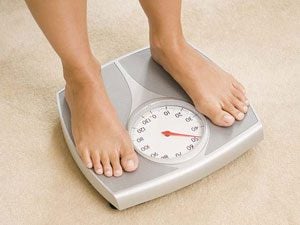 Studies found that people who keep food diaries
wind up eating about 15 percent less food than those who don’t. Watch out for
weekends: A University of North Carolina study found people tend to consume an
extra 115 calories per weekend day, primarily from alcohol and fat. Then cut
out or down calories from spreads, dressings, sauces, condiments, drinks, and
snacks; they could make the difference between weight gain and loss.
Studies found that people who keep food diaries
wind up eating about 15 percent less food than those who don’t. Watch out for
weekends: A University of North Carolina study found people tend to consume an
extra 115 calories per weekend day, primarily from alcohol and fat. Then cut
out or down calories from spreads, dressings, sauces, condiments, drinks, and
snacks; they could make the difference between weight gain and loss.
2. Add 10 percent to the amount of daily calories you think you’re
eating.
If you think
you’re consuming 1,700 calories a day and don’t understand why you’re not
losing weight, add another 170 calories to your guesstimate. Chances are, the
new number is more accurate. Adjust your eating habits
accordingly.
3. Get an online weight loss buddy to lose more weight.
A University of Vermont study found that online
weight-loss buddies help you keep the weight off. The researchers followed
volunteers for 18 months. Those assigned to an Internet-based weight
maintenance program sustained their weight loss better than those who met
face-to-face in a support group.
4. Get a mantra.
You’ve heard
of a self-fulfilling prophecy? If you keep focusing on things you can’t do,
like resisting junk food or getting out the door for a daily walk, chances are
you won’t do them. Instead (whether you believe it or not) repeat positive
thoughts to yourself. “I can lose weight.” “I will get out for my walk today.”
“I know I can resist the pastry cart after dinner.” Repeat these phrases and
before too long, they will become true for you.
5. After breakfast, stick to
water.
At breakfast,
go ahead and drink orange juice. But throughout the rest of the day, focus on
water instead of juice or soda. The average American consumes an extra 245
calories a day from soft drinks. That’s nearly 90,000 calories a year—or 25
pounds! And research shows that despite the calories, sugary drinks don’t
trigger a sense of fullness the way that food does.
6. Eat three fewer bites of your meal,
one less treat a day, or one less glass of orange
juice. Doing any of these can save you about 100 calories a day, and that alone
is enough to prevent you from gaining the two pounds most people mindlessly
pack on each year.
7. Watch one less hour of TV.
A study of 76 undergraduate students found the
more they watched television, the more often they ate and the more they ate
overall. Sacrifice one program (there’s probably one you don’t really want to
watch anyway) and go for a walk instead.
8. Wash something thoroughly once a week.
Whether that’s a floor, a couple of windows, the
shower stall, bathroom tile, or your car, a 150-pound person will burn about
four calories for every minute spent cleaning. Scrub for 30 minutes and you
could work off approximately 120 calories, the same number in a half-cup of
vanilla frozen yogurt.
9. Wait until your stomach rumbles before you reach for food.
It’s stunning how often we eat out of boredom,
nervousness, habit, or frustration—so often, in fact, that many of us have
actually forgotten what physical hunger feels like. If you’re hankering for a
specific food, it’s probably a craving, not hunger. If you’d eat anything you
could get your hands on, chances are you’re truly hungry. Find ways other than
eating to express love, tame stress, and relieve boredom.
10. Sniff a banana, an apple,
or a peppermint when you feel hungry.
You might feel silly, but it works. When Alan R.
Hirsch, M.D., neurological director of the Smell & Taste Treatment and
Research Foundation in Chicago, tried this with 3,000 volunteers, he found that
the more frequently people sniffed, the less hungry they were and the more
weight they lost—an average of 30 pounds each. One theory is that sniffing the
food tricks the brain into thinking you’re actually eating it.
Monday, 6 April 2015
How Gender Reassignment Surgery Works ????
GENDER Reassignment:

As
you were growing up, how did you know you were a girl or a boy? Was it because
you had a vagi*a or a p*nis? Or was it something other than than what your body
looked like? Some people feel that their minds and bodies don't match up. This
feeling is commonly known as gender identity disorder or gender dysphoria. The
medical community used to use the word "transsexuals" to describe
this community. But today, "transgender"
is used as a general, non-medical term to describe anyone whose gender identity
is different from their physical sex at birth.
Transgender
people often wish to live as a different gender than the one they were assigned
when they were born. They may may transform their bodies through gender reassignment surgery, also known as gender
confirmation surgery --
a collection of procedures also commonly known as a "sex change." The word
"transition" describes a person's shift to living as the gender they
perceive themselves to be, rather than the sex they were assigned at birth.
Surgery is sometimes, but not always, part of a person's transition.
Gender
identity struggles usually begin in early childhood but have been identified in
people of all ages. A biologically born man who identifies as a woman is known as transwoman,
or transgender woman. A biologically born woman who identifies as a man is
known as transman, or transgender man. There
are also people whose identity lies somewhere along a spectrum of gender who
may refer to themselves as neither male nor female.
It's
estimated that one in 11,900 males and one in 30,400 females are transgender
adults [source: WPATH
Standards of Care]. Lynn Conway, a professor emerita at the
University of Michigan, estimates that one in 2,500 United States citizens has undergone male-to-female
gender reassignment surgery [source:Advocate].
One
of the most publicized Americans to undergo such surgery was Christine
Jorgensen, who traveled toDenmark in
1952 to undergo an early gender reassignment surgery. Genital reassignment
surgery wasn't performed in the U.S. until 1966. Jorgensen later worked with
Dr. Harry Benjamin, the physician who coined the term "transsexual."
Benjamin was one of the pioneering doctors to research and work with gender
identity disorders, using the research of Magnus Hirschfeld, of the Institute
for Sexual Science, and Alfred Kinsey, of the Kinsey Institute, as his
springboard.
In
1966, Benjamin published "The Transsexual Phenomenon" and went on to
establish the Harry Benjamin International Gender Dysphoria Association, Inc.
(HBIGDA). Today HBIGDA is known as the World Professional Association for
Transgender Health (WPATH), and is an international organization devoted to
furthering the understanding and treatment of gender identity disorders. WPATH
established and still publishes the Standards of Care (SOC) for the treatment of gender identity
disorders. It also publishes ethical guidelines for professionals caring for
transsexual patients.
So
what are the requirements for gender reassignment surgery? Are patients fertile
and able to have sex? Go to the next page to find out what happens before a
person physically changes genders.
Why do girls wear pink and boys wear blue ????
Surely
you've done it before. You see a small baby and, based on the color of the
baby's blanket, decide whether it's a boy or a girl. It's common knowledge that
pink is for girls and blue is for boys. But have you ever wondered why? Why is
it that boys prefer blue and girls pink? Is it a cultural phenomenon, as many
assume? Or does this distinction between color preferences occur on a different
level?

This
question is exactly what two neuroscientists working at Newcastle University in
Great Britain seek to answer. Doctors Anya Hurlbert and Yazhu Ling created an
experiment concerning color preferences among men and women.
The journal Current Biology published their findings in the Aug. 21, 2007,
issue.
The
researchers assembled 206 test subjects of both sexes between the ages of 20
and 26 for the study. Most were British Caucasians, but 37 were of Chinese
ancestry and were raised in China. The subjects sat before a computer while two rectangles of different
colors flashed on the screen. For the purpose of the study, the neuroscientists
divided the color spectrum into two halves, red-green and blue-yellow. The
rectangles were sorted into these two categories.
The
researchers asked participants to quickly choose which rectangle they
preferred, and then the computer moved on to another set of rectangles. The
findings from the experiment showed that men and women both preferred blue out
of this set of basic colors.
When
given mixed colors to choose from, the male population of the study showed a
wide preference for color blends. But when the women were asked to choose from
mixed colors, they tended to prefer colors that moved away from blue and toward
the red end of the spectrum, where shades like pinks and lilacs are found. The
scientists concluded that the long-held distinction of color preferences among
genders had a real basis.
But
why? Couldn't these results be due to the participants being raised in a
culture where blue is for boys and pink for girls? In other words, couldn't the
color preferences be learned rather than innate --
something we're born with?
That's
where the Chinese participants came in. To show the pink/blue color preference
exists across cultures and is therefore not a cultural construct, the
researchers gave the same test to Chinese subjects. The results were similar
among the Chinese women and the British women: Both preferred the shades found
on the red side of the spectrum.
This
lends support to the notion that color preferences among the sexes have a
biological basis rather than a cultural one. The researchers hope to support
this conclusion with a revised version of the test modified for infants. A very
young child, the scientists reason, hasn't yet had a chance to be socialized
into a gender role by society. Therefore, any color preferences displayed by
babies would have to be innate.
But
the question remains -- why is there a distinction among males and females
regarding color preferences? Doctors Hurlbert and Ling suggest that the reason
is found in humanity's distant past. Read the next page to find out how the
origins of our color preferences might be found on the African savannah.
How to Make Money Without a Job ????
How to Make
Money Without a Job :

Jobs
are so 20th century. Welcome to the "gig" economy, where more than 20
million Americans are full-time "freelancers,"
"consultants," "independent contractors" and other code
names for not having a "real" job [source: Greenhouse].
True, the Great Recession forced a lot of workers into the freelance ranks, but
more than half of "solopreneurs" actively choose the jobless
lifestyle [source: Florida].
No time clocks, no cubicles, and best of all, no bosses.
But
how much money can you make without a traditional job? That depends on your
skills, experience and flair for self-promotion. There are wildly popularbloggers who pull in six figures a month, but
the general trend is that freelance workers earn slightly less than their
cubicle-bound colleagues – about $15.60 per hour versus $20 per hour [source:Florida].
Of
the more than 200,000 members of the Freelancers Union — one of America's
fastest-growing labor organizations — 58 percent earn less than $50,000 a year
and 29 percent earn less than $25,000 [source: Greenhouse].
Even
if you won't get rich as an independent worker, there are plenty of other
benefits to going jobless: You can better adapt your work schedule to family
life. You can tinker with many different projects instead of doing the same
thing day after day. And, best of all, you call the shots.
But
what if the freelance life is still too confining? What if you want to make
money without working at all? Is it possible to keep food on the table and a
roof over your head without doing the barest minimum of work? It sounds too
good to be true, but let's explore the options, starting with the simplest of
economic transactions: selling stuff.
How to regain your lost hair ??
The 100% Natural 3-Week
Hair Restoration Method
that’s Taking the World by Storm
Can you get a full, thick head of hair in three
weeks?
Without prescription drugs, painful transplants, wigs, or expensive
treatments?
This breakthrough method can change your life. No longer will you look with envy at other men (or women) with thick, full hair. Instead, you’ll be the Prom King (or Queen) at your reunion.
This hair restoration method is 100% natural, because it attacks the reason you lose your hair in the first place. In essence, this method “rights the wrongs” in your body, and the result is full, thick hair – just like when you were younger! Best of all, it’s not only natural, but fast – as soon as 3 weeks!
This breakthrough method can change your life. No longer will you look with envy at other men (or women) with thick, full hair. Instead, you’ll be the Prom King (or Queen) at your reunion.
This hair restoration method is 100% natural, because it attacks the reason you lose your hair in the first place. In essence, this method “rights the wrongs” in your body, and the result is full, thick hair – just like when you were younger! Best of all, it’s not only natural, but fast – as soon as 3 weeks!
Click here to watch a video :::::::: Hair loss protocol
HOW TO GET RID OF DRY SKIN ON YOUR FEET
We're hard on our
feet, doing everything from stuffing them in stilettos to exposing them to the
elements to running miles and miles on them. No wonder dry skin on the feet is
a common complaint! Not only is dry skin on your feet unattractive and embarrassing,
it can also be itchy, painful, and burning, too, especially in the case of
conditions like athlete's foot.

What causes dry skin on your feet?
There are a number of reasons for dry skin on the feet and toes.
Just like anywhere else on the body, xerosis (dry skin) occurs when an
environmental factor, like lack of humidity, medications, or harsh ingredients
in your soap, strips away the fatty coating that protects skin from the
elements. Red, itchy patches can pop up as telltale symptoms of dry skin.
But if moisturizing
doesn't help the problem, you may be suffering from a bigger issue. Medical
conditions such as diabetes, psoriasis, thyroid disease, eczema and athlete's
foot can also cause dry, cracked skin on your feet, among other symptoms.
The majority of the
time patients think their problem is dry skin, it's actually athlete's foot,
says Sima Soltani, DPM, in Irvine, Calif., in an article on NailsMag.com. There are three
different types of it, and it can look like a red, scaly infection on the sole
and side of the foot or blisters on the bottom of the foot, says Miguel
Sanchez, MD, associate professor, NYU Department of Dermatology, Director of
Dermatology, Bellevue Hospital Center.
Fungal and
bacterial foot problems like athlete's foot occur because our feet spend most
of the day stuffed into shoes—warm, dark, sweaty places are the perfect
conditions for fungus to thrive. These conditions can cause dry skin on your
feet, and possibly redness, blisters, itching, and peeling.
The most common
form of athlete's foot is itchy skin in between toes called toe-web infection.
The moccasin-type infection can be red and scaly and affects the plantar area
of the sole and sides. The third type is a vesicular-type infection that causes
blisters on the undersides of the foot. Which type of athlete's foot you get
depends on how you got the infection and how the fungus is affecting you. Also,
remember that when your feet are wet, you're more susceptible to toenail fungus,
which left untreated can spread across toes.
(Source : Narayanaa’s
Forum)
Subscribe to:
Posts (Atom)